



2026 Season: Chinese Super League Welcomes Opportunities, League One and Two Face Challenges



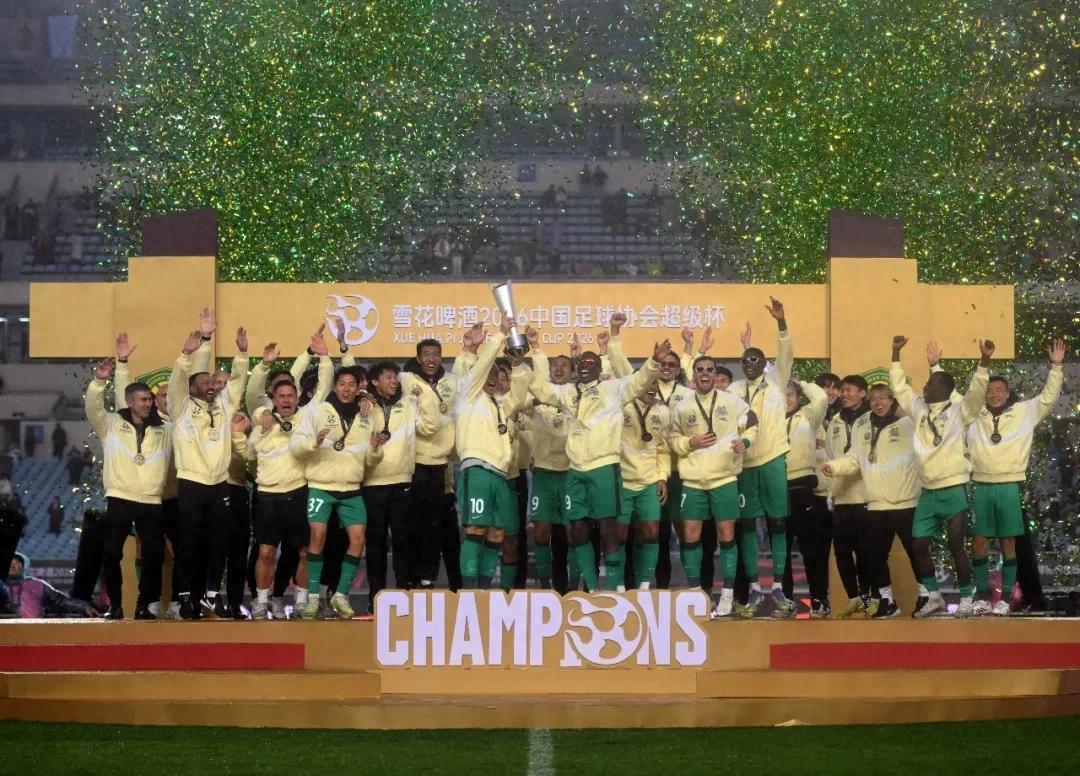
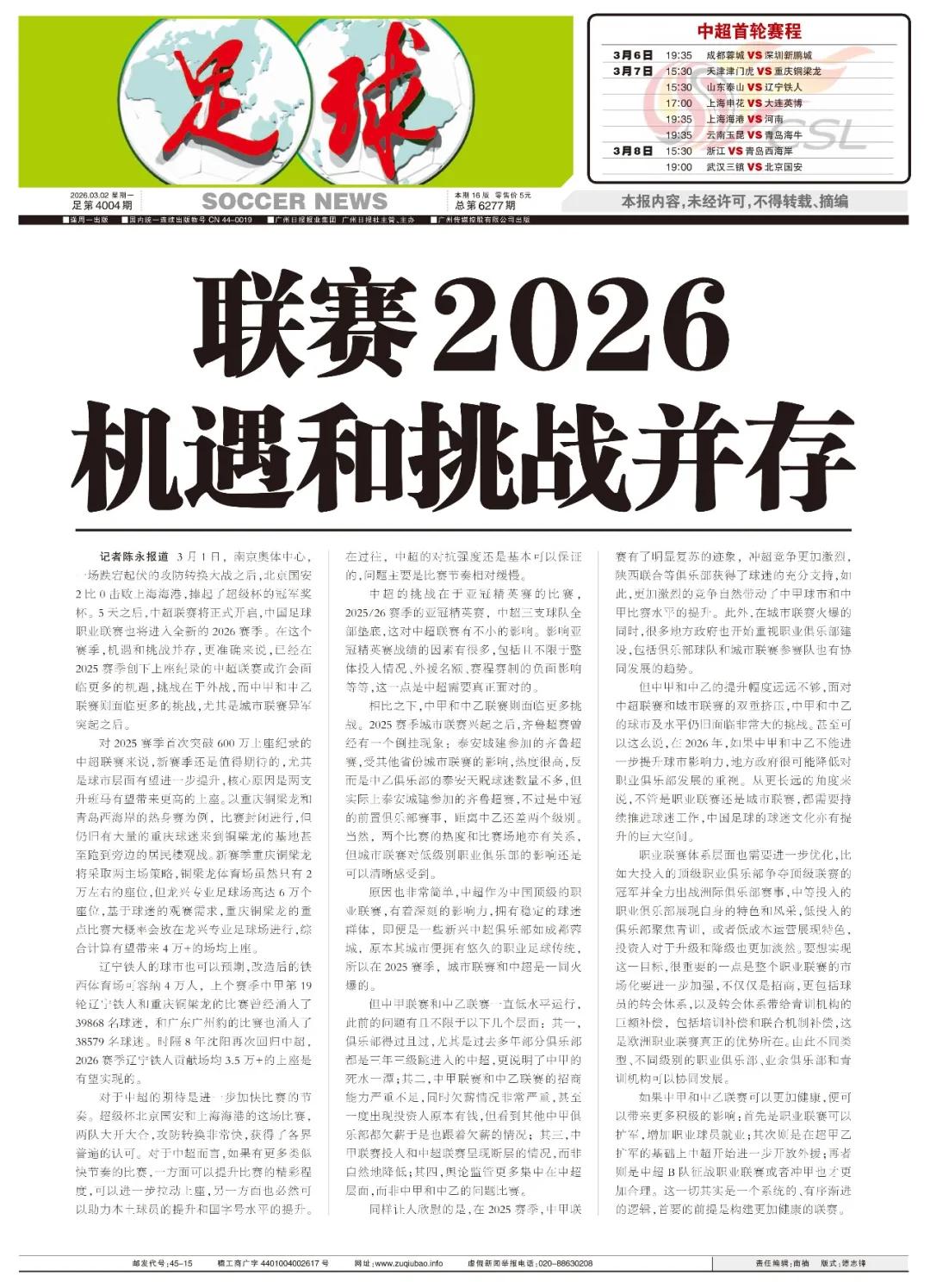
Reporter Chen Yong reports On March 1st, at the Nanjing Olympic Sports Center, after a match full of dramatic shifts in momentum, Beijing Guoan defeated Shanghai Port 2-0 to claim the Chinese FA Super Cup trophy. Five days later, the CSL kicks off, ushering in the fresh 2026 season. This season presents both opportunities and challenges. More precisely, the CSL, which set a new attendance record in 2025, may encounter greater opportunities, with challenges lying in continental competitions. Conversely, China League One and League Two face more significant hurdles, especially with the rapid rise of city-based leagues.
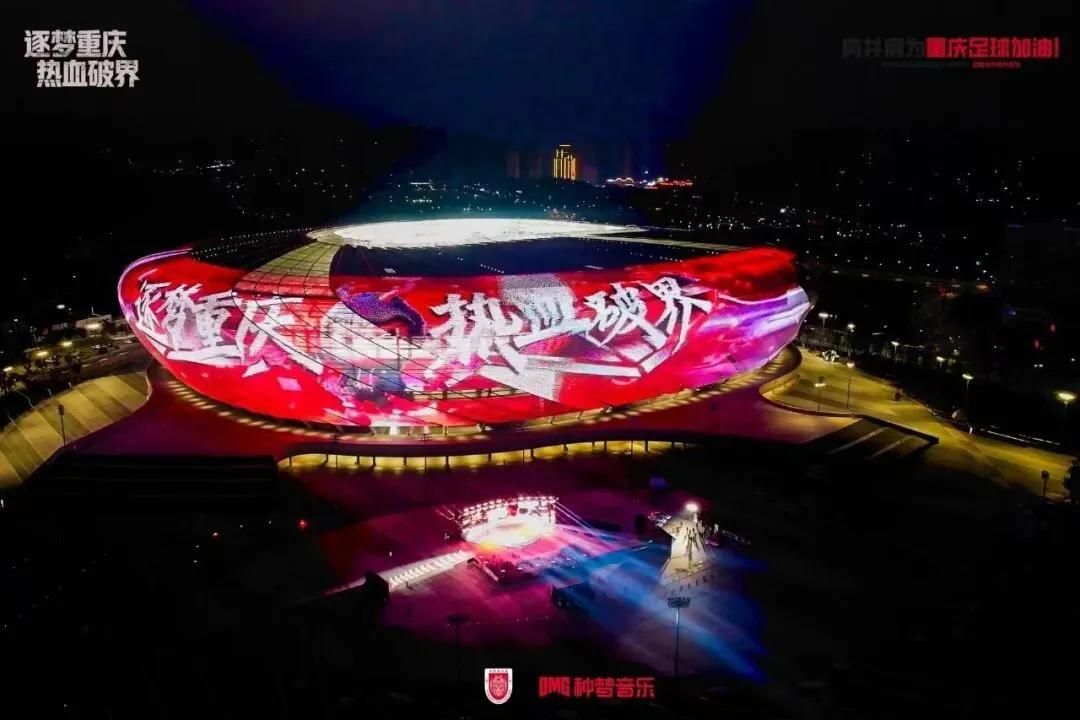
For the CSL, which surpassed 6 million in total attendance for the first time in 2025, the new season holds promise, particularly for further growth in matchday revenue. A key reason is the potential boost from the two promoted clubs. Taking the preseason friendly between Chongqing Tongliang Long and Qingdao West Coast as an example, although closed-door, many Chongqing fans gathered at Tongliang Long's base and even nearby residential buildings to watch. For the new season, Chongqing Tongliang Long will adopt a dual-home stadium strategy. While Tongliang Long Stadium has about 20,000 seats, the Longxing Professional Football Stadium boasts 60,000. Given fan demand, Chongqing's major matches will likely be held at Longxing, potentially contributing to an average attendance exceeding 40,000.
Liaoning Tieren's match attendance is also promising. The renovated Tiexi Stadium can hold 40,000 spectators. In the 2025 League One season, a match between Liaoning Tieren and Chongqing Tongliang Long attracted 39,868 fans, while a game against Guangdong Guangzhou Panthers drew 38,579. With Shenyang returning to the top flight after eight years, Liaoning Tieren achieving an average attendance of 35,000+ in the 2026 CSL season is a realistic expectation.
For the CSL, the hope is to further accelerate the pace of play. The Super Cup match between Beijing Guoan and Shanghai Port was wide-open, with rapid transitions, earning widespread acclaim. More matches of this fast-paced nature in the CSL would enhance the spectacle, potentially boosting attendance, and would undoubtedly aid in the development of domestic players and the national team's standard. Historically, the CSL's physical intensity has been adequate, but the overall tempo has often been relatively slow.
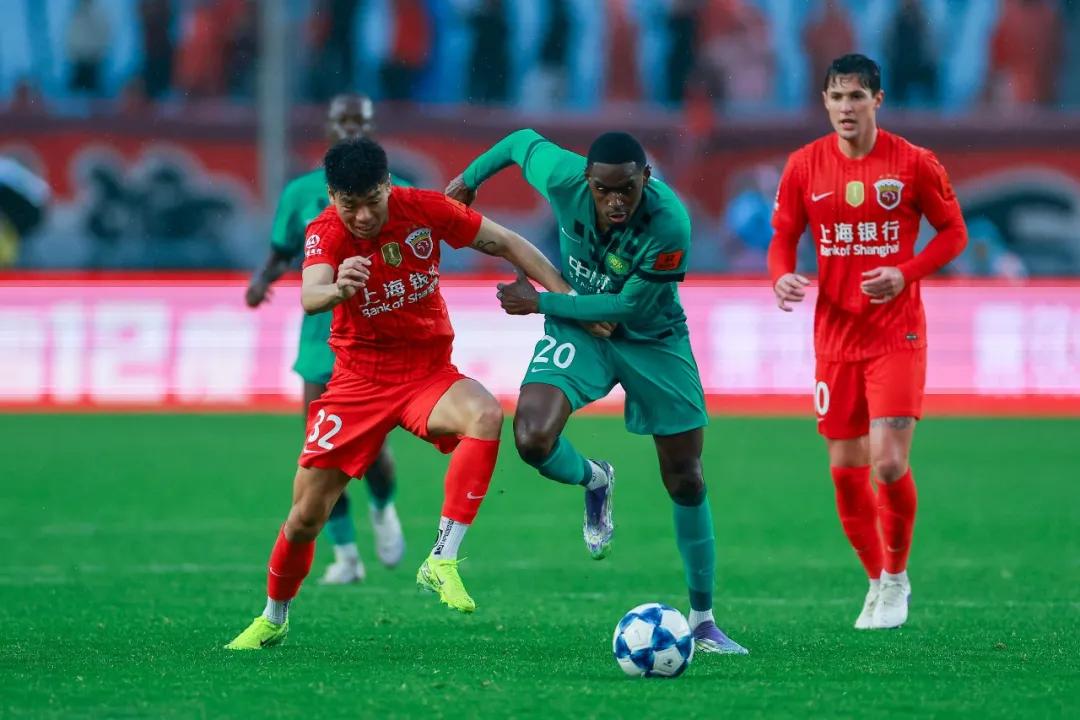
The CSL's challenge lies in the AFC Champions League Elite. In the 2025/26 season, all three Chinese clubs finished bottom of their groups, which negatively impacts the league's reputation. Factors affecting this performance are numerous, including overall investment levels, foreign player quotas, and scheduling issues, which are genuine concerns the CSL must address.
In contrast, League One and League Two face greater challenges. Following the rise of city leagues in 2025, an inversion phenomenon was observed in the Qilu Super League: matches involving Taian Chengjian attracted significant attention, influenced by similar leagues in other provinces, while Taian Tiankuang, a professional League Two club, drew smaller crowds. However, Taian Chengjian participates in the Qilu Super League, a pre-Champions League (fourth tier) competition, two levels below League Two. While venue differences play a role, the impact of city leagues on lower-tier professional clubs is palpable.
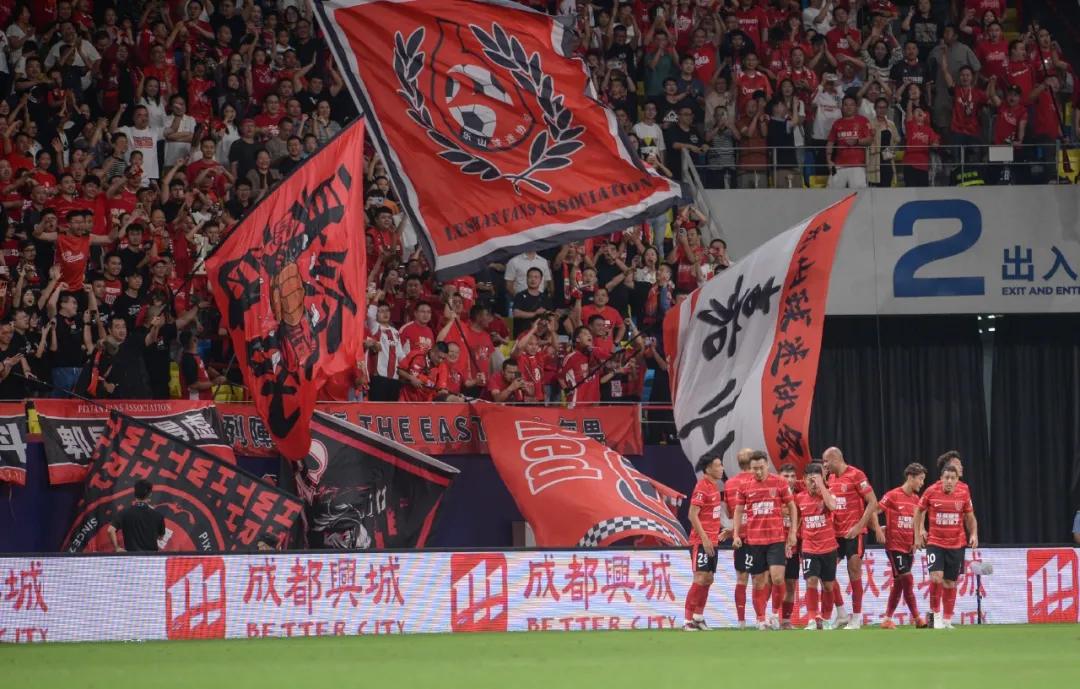
The reasons are straightforward. The CSL, as China's top professional league, holds substantial influence and maintains a stable fanbase. Even newer CSL clubs like Chengdu Rongcheng are in cities with long-standing professional football traditions. Thus, in 2025, both city leagues and the CSL thrived simultaneously.
However, League One and Two have long operated at a low level due to several persistent issues: First, a lack of ambition among clubs, exemplified by some achieving rapid promotions to the CSL in the past, highlighting stagnation in League One. Second, severe deficiencies in commercial revenue generation, coupled with widespread and chronic payment delays to players and staff—sometimes even when investors had funds, they followed suit seeing others do it. Third, a stark investment gap between the CSL and lower leagues, not a natural gradient. Fourth, media and regulatory scrutiny focuses predominantly on the CSL, often overlooking problems in Leagues One and Two.
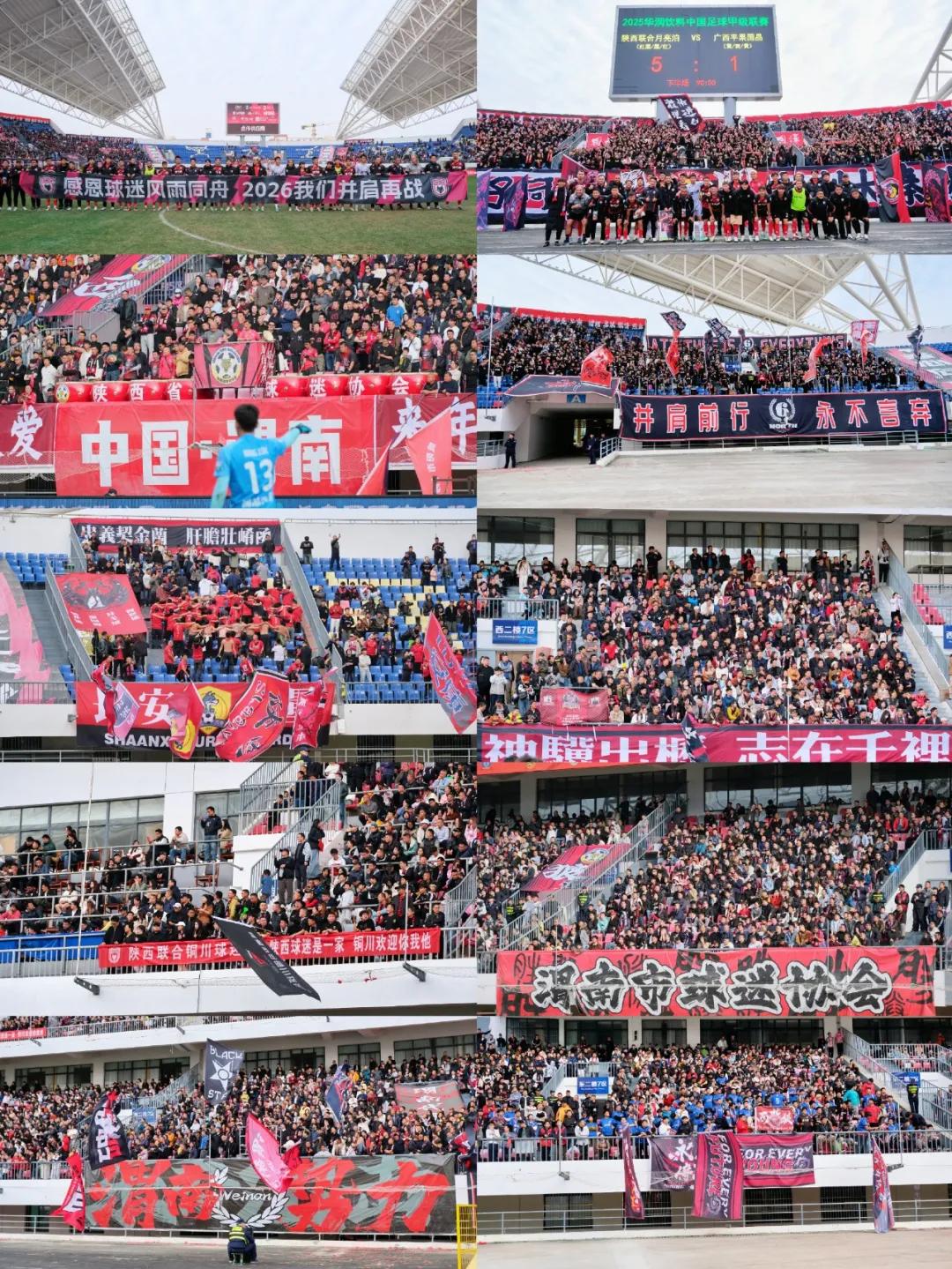
In the 2025 season, League One showed signs of revival, with more intense competition for promotion. Clubs like Shaanxi Union gained strong fan support, naturally stimulating attendance and raising the league's competitive level. Additionally, alongside the popularity of city leagues, many local governments began prioritizing professional club development, showing trends of synergy between professional clubs and city league teams.
Nevertheless, it's clear that the progress in Leagues One and Two remains insufficient. Squeezed by both the CSL and city leagues, their match attendance and overall standards still face significant challenges. It could even be said that in 2026, if Leagues One and Two cannot enhance their market appeal, local governments might reduce their focus on professional club development. In the longer term, both professional and city leagues need continuous fan engagement efforts, as Chinese football fan culture has considerable room for growth.
The professional league system itself requires further optimization. For instance, high-investment top clubs compete for domestic titles and excel in continental tournaments; mid-level clubs develop distinct identities; low-investment clubs focus on youth development or efficient, distinctive operations, with investors taking a more relaxed view towards promotion/relegation. Achieving this depends heavily on deepening marketization across the league—not just commercial partnerships, but also the player transfer system and the substantial compensation it provides to youth academies (training and solidarity payments). This is a key strength of European football systems, enabling synergistic development among clubs of different types, levels, and youth academies.
Healthier League One and Two circuits would bring multiple benefits: First, allowing for expansion of the professional league pyramid, creating more playing careers. Second, paving the way for further liberalization of foreign player rules in the CSL post-expansion. Third, making it more logical for CSL 'B' teams to participate in lower professional leagues or seek promotion. This represents a systematic, gradual logic, with the primary prerequisite being the construction of more robust league foundations.


Wonderfulshortvideo
Kvaratskhelia and Ronaldo 🫶


🇪🇸 Spain 🆚 Argentina 🇦🇷
When Diogo Costa saved EVERY penalty he faced in the shoot-out 🤯🤯🤯
The movement is electric ⚡️
Never gives up 💪
Things you really love to see
Neymar highlights neymar edit neymar lamine yamal celebration
 Links
Links
 Contact
Address:UNIT 1804 SOUTH BANK TOWER, 55 UPPER GROUND,LONDON ENGLAND SE1 9E
Number:+85259695367
E-mali:icecmxtdaf@gmail.com
 App
App


